

Built-in Kitchen Cabinet Turkey
The Ultimate Guide to Built-in Kitchen Cabinets in Turkey: Trends, Manufacturing, Materials, and Installation Excellence
The kitchen is the undisputed heart of the modern home. In Turkey, where culinary traditions are deeply rooted in culture and daily life, the kitchen serves as both a high-traffic workspace and a social gathering hub. As residential architecture in major Turkish cities like Istanbul, Ankara, and Izmir shifts toward space optimization and sleek aesthetics, built-in kitchen cabinets in Turkey have transitioned from a premium luxury to a fundamental design standard.
When homeowners, property developers, and international buyers invest in a kitchen renovation, they look for systems that maximize spatial efficiency, withstand heavy daily use, and integrate seamlessly with modern cooking appliances. This comprehensive, technically in-depth guide explores the entire landscape of built-in kitchen cabinets in Turkey. From structural engineering and material sciences to regional manufacturing hubs, cost breakdowns, and step-by-step installation methodologies, this article delivers authoritative insight into creating a world-class Turkish culinary space.
1. Understanding Built-in Kitchen Cabinets in Turkey: Architectural Shift & Cultural Context
To fully appreciate the design of built-in kitchen cabinets in Turkey, one must understand how Turkish architectural philosophy has evolved alongside local culinary practices. Historically, Turkish kitchens were separate, utilitarian spaces designated solely for food preparation. Traditional Turkish cooking involves extensive prep work, the use of large cookware (such as wide tepsi trays and deep stockpots), and the storage of bulk dry goods like pulses, grains, and olive oil.
With the rise of urban high-rises and open-plan apartments over the last two decades, the architectural layout of Turkish homes underwent a massive transformation. The demand for maximizing limited square footage led to the widespread adoption of built-in cabinet systems (ankastre mutfak dolapları).
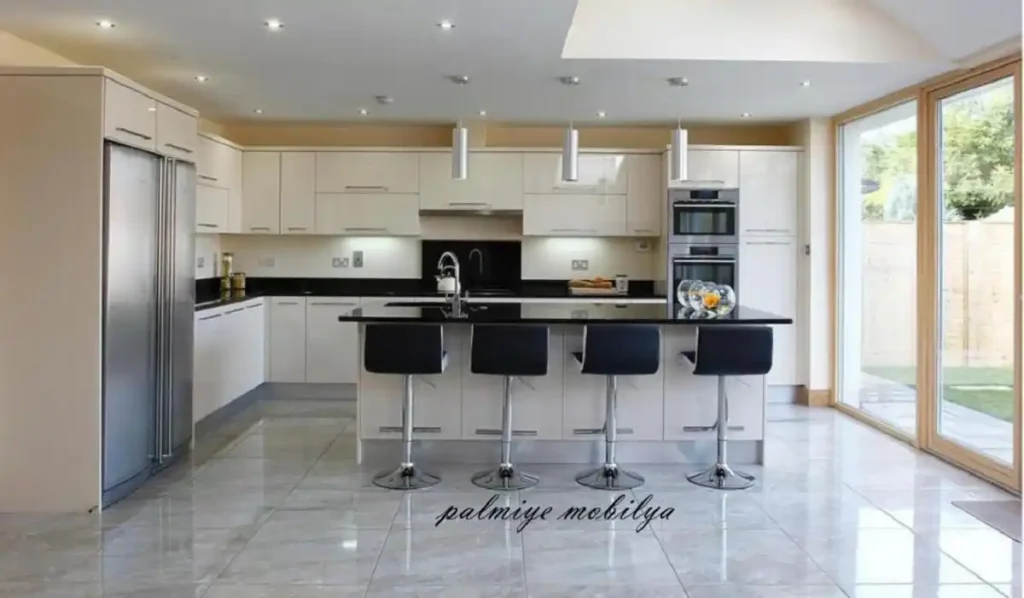
Unlike freestanding furniture, built-in kitchen cabinets are structurally integrated into the walls and architectural floor plan of the property. They are designed to encapsulate major appliances—such as ovens, microwaves, dishwashers, and refrigerators—flush within the cabinetry framework. This creates a continuous, unbroken visual line that makes small urban kitchens appear significantly larger while eliminating dust-collecting gaps between appliances and furniture.
Furthermore, Turkish hospitality demands that the kitchen remain impeccably organized. Built-in systems address this by utilizing floor-to-ceiling pantry units, blind-corner pull-outs, and integrated waste management systems. The result is a highly functional, visually minimalist environment that caters perfectly to both traditional, heavy-duty cooking and modern, fast-paced lifestyles.
2. Core Material Science: What Lies Beneath the Surface
The longevity and performance of built-in kitchen cabinets in Turkey are entirely dictated by the quality of the substrate materials used in their construction. Because kitchens are exposed to constant fluctuations in humidity, ambient temperature spikes from cooking, and localized water exposure near sinks, choosing the right structural core is paramount.
When evaluating Turkish cabinetry, the industry relies on three primary engineered wood variants:
Moisture-Resistant MDF (Medium-Density Fiberboard)
MDF is the gold standard for premium built-in kitchen cabinets in Turkey, particularly for cabinet doors and visible end panels.
- Composition: Created by breaking down hardwood or softwood residuals into fine wood fibers, combining them with synthetic resin binders, and compressing them under high pressure and temperature.
- Why it excels: MDF possesses a highly dense, homogenous structure completely free of knots or grain patterns. This smooth consistency makes it the ideal substrate for high-gloss lacquering, membrane pressing, and precision CNC routing.
- The Turkish standard: Premium Turkish manufacturers utilize green-core, moisture-resistant MDF (often classified under European standard EN 312) for sink bases and high-humidity zones to prevent structural swelling.
High-Density Particleboard (Chipboard / Sunta)
Particleboard is the most widely used material for the internal carcase (the structural boxes) of mid-range and budget-friendly kitchens in Turkey.
- Composition: Manufactured by mixing wood chips, sawmill shavings, and resin, which are then pressed into dense sheets.
- The Turkish evolution: While historical chipboard was prone to crumbling and water damage, modern Turkish mills produce advanced Melamine-Faced Chipboard (MFC), locally referred to as Suntalam.
- Application: Suntalam panels are coated with a resin-impregnated decorative paper on both sides. This creates a hard, scratch-resistant, and water-repellent surface that is exceptionally easy to clean, making it perfect for internal shelving and cabinet chassis construction.
Marine Plywood (Kontraplak)
For high-end, custom-engineered luxury kitchens, marine-grade plywood is utilized for the structural framework.
- Composition: Constructed from multiple thin layers of wood veneer glued together with cross-grained alternating layers using water-resistant structural adhesives.
- Performance: It offers the highest weight-to-strength ratio and unmatched dimensional stability under extreme moisture conditions. It is frequently specified for luxury villas in coastal Turkish regions like Bodrum, Antalya, and Çeşme, where seaside humidity can compromise lesser materials.
3. Surface Finishes and Edge Banding Technologies
While the substrate provides the muscle, the surface finish delivers the visual identity and primary defense mechanism of built-in kitchen cabinets in Turkey. Turkish manufacturers have invested heavily in German and Italian surface application machinery, offering a diverse array of finishes tailored to different budgets and design styles.
+-------------------------------------------------------------------------------+

|                      SURFACE FINISH PERFORMANCE MATRIX                       |
+----------------------+--------------------+-------------------+---------------+

| Finish Type          | Scratch Resistance | Moisture Barrier  | Budget Level  |
+----------------------+--------------------+-------------------+---------------+

| Acrylic Panels       | Very High          | Exceptional       | Premium       |
| Lacquer (Polyurethane)| Medium             | High (Seamless)   | Luxury        |
| Membrane (PVC)       | Medium-High        | High (Contoured)  | Mid-Range     |
| Laminate / Melamine  | High               | Medium-High       | Cost-Effective|
+----------------------+--------------------+-------------------+---------------+
Acrylic Panels (Akrilik Kapak)
Acrylic doors represent the pinnacle of modern, ultra-glossy design in Turkish contemporary kitchens.
- The Technology: A thick, solid sheet of acrylic plastic is co-extruded and permanently bonded onto an MDF core using PUR (Polyurethane) hot-melt adhesives.
- Characteristics: It delivers a flawless, mirror-like reflection (high-gloss) or a deep, velvety non-reflective texture (super-matte). Acrylic is highly resistant to UV discoloration, scratch-resistant, and completely impervious to kitchen steam.
Lacquer and Painted Finishes (Lake Kapak)
Lacquered cabinets represent the traditional artisan craft fused with modern chemical engineering.
- The Process: Multiple layers of polyurethane or acrylic paint are sprayed onto CNC-machined MDF panels in dust-free automated booths. Each layer is meticulously sanded before the next application, culminating in a final clear topcoat.
- Design Freedom: Because the paint coats the front, back, and all edges simultaneously, a lacquered door is entirely seamless. There are no joints or edge bands where moisture can penetrate. This technique allows for complex, classic country designs like Shaker-style profiling and custom color matching across the entire RAL spectrum.
Membrane / Thermofoil Finishes (Membran Kapak)
Membrane technology is highly favored in Turkey for creating intricate, three-dimensional door patterns at an accessible price point.
- The Process: Rigid PVC (Polyvinyl Chloride) foils are applied to profiled MDF panels using a vacuum-membrane press machine. Under high heat and intense vacuum pressure, the vinyl foil stretches and molds perfectly over the grooves, bevels, and edges of the wood core.
- Benefits: This creates a continuous, easy-to-wipe surface that mimics solid wood grains or smooth mattes without the high cost of raw timber or multi-stage lacquering.
Laminate and Melamine (Mutfak Laminat)
Laminate represents the workhorse of the industry, offering unmatched durability.
- High-Pressure Laminate (HPL): Consists of multiple layers of kraft paper impregnated with phenolic resins, topped with a printed decorative paper and a protective overlay, fused under immense pressure. HPL is extremely impact-resistant and is commonly applied to flat-panel, minimalist kitchen doors.
The Critical Role of Laser Edge Banding
Historically, the weakest point of any kitchen cabinet door was the seam where the face finish met the edge band. Moisture from boiling kettles or dishwashers would compromise the glue line, causing the edge to peel (kenar bandı kalkması).
To solve this, leading producers of built-in kitchen cabinets in Turkey utilize zero-joint laser edge banding technology. Instead of applying traditional EVA hot-melt glue, a high-intensity laser or hot-air system melts a co-extruded functional layer on the back of the polymer edge band (usually ABS or PP). The melted layer is fused directly into the wood fibers of the MDF core. This creates an invisible structural bond that is completely waterproof, heat-proof, and visually seamless.
4. Hardware, Ergonomics, and Internal Motion Systems
A kitchen can only be as good as its moving parts. The internal hardware determines whether a cabinet door sags over time or whether a heavy pot drawer glides effortlessly. In Turkey, built-in kitchen layouts rely heavily on premier European and domestic functional hardware systems to deliver optimal ergonomics.
Soft-Close Hinge Mechanics
Modern Turkish built-in cabinetry mandates the integration of hydraulic, soft-close concealed clip hinges (typically 110-degree opening angles for standard cabinets, and up to 155-degree wide-angle hinges for cabinets featuring internal pull-out drawers). Brands like Blum (Austria), Hettich (Germany), and Samet (a leading Turkish domestic manufacturer) are standard. These hinges allow cabinet doors to close silently, preventing structural wear on the cabinet carcase from forceful slamming.
Double-Wall Metal Drawer Systems
Traditional wooden drawer boxes on plastic rollers have been completely phased out in contemporary Turkish kitchen design. They are replaced by synchronized, full-extension, double-wall steel drawer runner systems.
- Weight Capacity: These runners can support static and dynamic loads ranging from 40kg to 70kg per drawer, allowing users to stock deep drawers with heavy cast-iron cookware or large porcelain dinnerware sets.
- Motion Profiles: They feature integrated liquid dampers for smooth deceleration, as well as tip-on (push-to-open) mechanical or electrical opening assistance for handle-less, ultra-minimalist kitchen facades.
Blind Corner and Space Optimization Engineering
Turkish architectural floor plans frequently feature L-shaped or U-shaped kitchen configurations, which naturally create deep, inaccessible corner cabinets. To reclaim this lost space, built-in kitchen cabinets in Turkey integrate highly sophisticated internal steel pull-out mechanisms:
- The Magic Corner System: A articulated four-basket pull-out shelf mechanism. When the cabinet door is pulled forward, the front baskets pivot out of the way while simultaneously drawing the concealed rear baskets into the accessible opening.
- LeMans Carousel Units: Named after the famous racetrack due to its organic, sweeping curves, this system features independently moving, kidney-shaped non-slip shelves that glide entirely out of the dead-corner cabinet space, allowing full overhead visibility and unobstructed physical access to stored items.
- Tall Pantry Pull-outs (Boy Kiler Sistemleri): Vertical, floor-to-ceiling steel rack structures attached to heavy-duty ball-bearing runners. Pulling the tall door brings the entire pantry inventory forward, eliminating the need to reach into the dark recesses of deep shelving.
5. Integrating Built-in Appliances (Ankastre): Dimensional Engineering
The fundamental defining characteristic of a built-in kitchen is its relationship with appliances. In Turkish, this category is known collectively as Ankastre Ürünler. For a built-in kitchen to look successful, the cabinetry must be manufactured to highly strict millimeter-accurate dimensional tolerances.
+-------------------------------------------------------------------------------+

|                 STANDARD BUILT-IN CABINET MODULE DIMENSIONS                   |
+----------------------+--------------------+-------------------+---------------+

| Cabinet Module       | Standard Width     | Standard Depth    | Standard Height|
+----------------------+--------------------+-------------------+---------------+

| Base Cabinets        | 450 / 600 / 900 mm | 560 - 580 mm      | 720 - 760 mm  |
| Wall Overhead Units  | 300 / 600 / 900 mm | 300 - 350 mm      | 360 / 720 / 900|
| Tall Appliance Tower | 600 mm             | 560 - 580 mm      | 2000 - 2400 mm|
+----------------------+--------------------+-------------------+---------------+
The Oven and Microwave Column (Boy Dolabı / Kule)
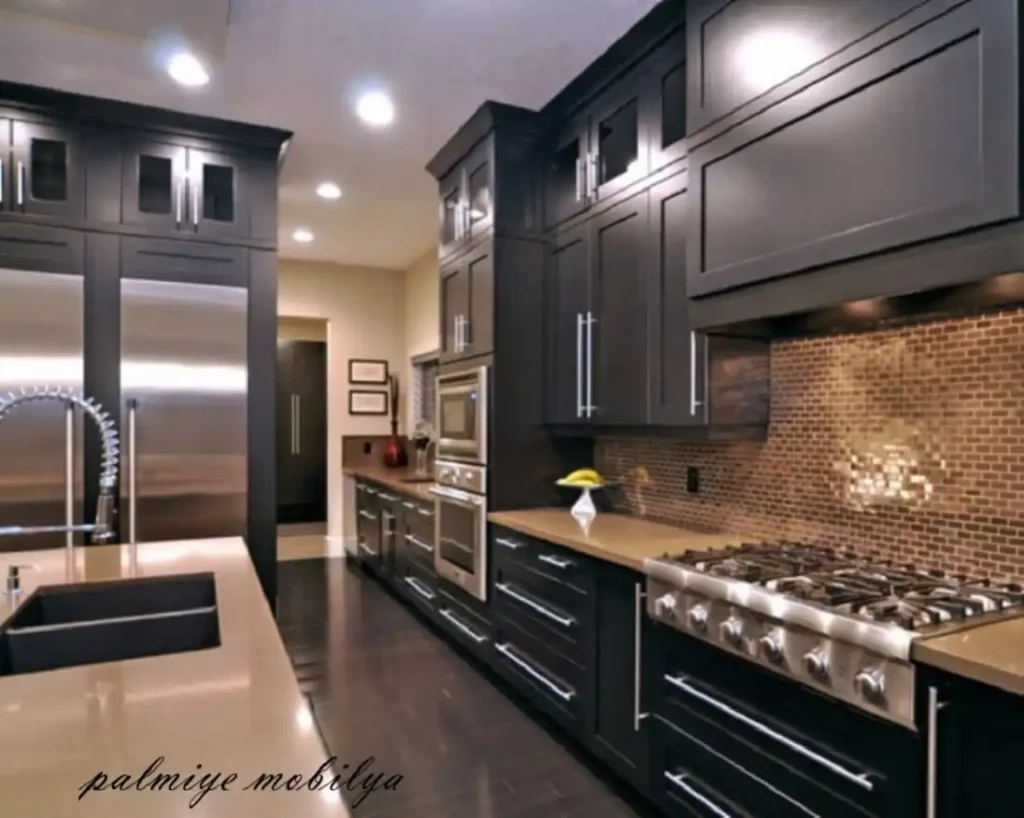
Instead of placing the oven below the countertop where the cook must constantly bend down, modern Turkish built-in designs favor ergonomic eye-level appliance columns.
- Ventilation Architecture: Built-in ovens generate significant radiant heat. The cabinetry module must feature an integrated ventilation pathway—typically a recessed air gap at the back of the cabinet box and an aluminum ventilation grille installed in the base plinth. This configuration allows cool air to rise from the floor, pass behind the oven chassis, and escape at the top ceiling boundary, preventing heat damage to the adjacent wood finishes.
Integrated Cooktops and Ventilation Hoods
- Cooktops: Built-in hobs (gas, glass-ceramic, or induction) are dropped directly into precision-cut apertures within the countertop. The cabinet box beneath the cooktop must be structurally reinforced with steel cross-braces or low-profile drawer boxes to clear the gas lines or induction electronic cooling fans.
- Concealed Hoods: In modern layouts, large, bulky chimney extractor hoods are increasingly replaced by integrated telescopic hoods hidden completely inside a standard upper wall cabinet module, or by down-draft induction hobs that pull steam downward through a internal carbon filtration system housed inside the base cabinet plinth.
Fully Integrated Dishwashers and Refrigerators
- Dishwashers: A fully integrated dishwasher features no visible control panel on the front face. The entire front door is clad with a matching custom cabinetry panel, and the control interface is accessed via the top lip of the appliance door when opened. The base plinth beneath the dishwasher must be carefully micro-beveled or cut with a pivot clearance to allow the cabinet panel to swing open cleanly without striking the floor trim.
- Refrigerators: Built-in refrigerators are completely encased inside high tall tower cabinets. The wooden cabinet doors are coupled to the heavy refrigerator doors using either sliding guide rails or a robust fixed-door-on-door hinge system. The ventilation channel at the rear of this unit is incredibly critical; poor airflow will cause the refrigerator compressor to overheat, rapidly decreasing the appliance’s lifespan and drastically increasing residential energy consumption.
6. Countertop Engineering: Pairing Surfaces with Built-in Systems
A premium set of built-in kitchen cabinets in Turkey must be paired with an equally durable, structurally sound countertop (mutfak tezgahı). The countertop anchors the upper and lower cabinet systems visually while bearing the brunt of physical kitchen labor. The Turkish market relies heavily on four distinct engineering surfaces:
Quartz Engineering Stone (Kuvars Tezgah)
Quartz brands like Çimstone and Belenco (both manufactured natively in Turkey) alongside international options like Silestone hold a dominant market share.
- Composition: Engineered by combining roughly 90-93% natural crushed quartz aggregate with 7-10% polyester resin binders and color pigments under high vibration and vacuum compaction.
- Properties: Quartz is non-porous, highly stain-resistant against aggressive local ingredients like tomato paste, pomegranate molasses, and red wine, and exhibits superb scratch resistance. However, it can be sensitive to thermal shock, meaning hot pans directly off the stove should never be placed onto it without a trivet.
Porcelain and Sintered Stone (Porselen Tezgah)
Porcelain slabs (such as Neolith, Dekton, or domestic Turkish oversized porcelain panels) represent the absolute cutting edge in luxury kitchen design.
- Composition: Formed from 100% natural minerals (clays, feldspar, silica) subjected to extreme pressure (over 400 bars) and fired in kilns at temperatures exceeding 1200°C.
- Performance: Porcelain surfaces are completely UV stable, entirely scratch-proof, non-porous, and perfectly heat-proof. Cooks can place piping hot pots directly onto the porcelain surface without any risk of cracking or discoloration. Furthermore, its structural rigidity allows for ultra-slim, sleek 12mm countertop profiles that complement modern minimalist built-in designs beautifully.
Acrylic Solid Surfaces (Akrilik Tezgah)
Commonly referred to by the brand name DuPont Corian, solid surfaces are composed of acrylic polymer mixed with natural alumina trihydrate minerals.
- The Highlight Features: Acrylic can be seamlessly joined using specialized color-matched bonding adhesives. Once sanded, an L-shaped or long linear countertop appears as one single, continuous block of stone with absolutely no visible seams.
- Integration: It allows for the fabrication of integrated acrylic kitchen sinks that flow smoothly into the countertop surface with no rim or lip, eliminating any tight corners where mildew or bacteria can manifest. The primary drawback is that acrylic is softer than quartz or porcelain and scratches more easily, though it can be buffed out and repaired in situ by a certified technician.
Granite and Marble (Doğal Taş)
Turkey possesses vast natural stone reserves, making high-end natural granites and marbles readily accessible. While granites offer phenomenal durability, classic Turkish marbles like Afyon White or Marmara Equator are highly sought after for luxury aesthetics. However, natural marble is fundamentally porous and calcium-rich; it requires annual chemical sealing and is highly susceptible to etching if exposed to acidic substances like lemon juice or vinegar.
7. The Turkish Kitchen Manufacturing Sector: Hubs, Standards, and Quality Ecosystems
Turkey has evolved into a global powerhouse for furniture manufacturing and engineered wood exports, serving Europe, the Middle East, North Africa, and Central Asia. The production of built-in kitchen cabinets in Turkey is backed by an advanced industrial infrastructure centered around several key geographical industrial manufacturing hubs:
Key Manufacturing Hubs
- Bursa (İnegöl): Universally recognized as the furniture capital of Turkey. İnegöl houses thousands of specialized furniture factories ranging from boutique artisan workshops to massive, fully automated Industry 4.0 production facilities that export high-volume kitchen cabinetry worldwide.
- Kayseri: Home to some of the largest industrial conglomerates in Turkey. Factories in Kayseri focus heavily on standardized, modular, mass-production cabinetry systems, utilizing state-of-the-art automated assembly lines to deliver exceptional value and reliable consistency.
- Istanbul and Kocaeli: These regions focus intensely on high-end, bespoke architectural design projects. The manufacturing facilities here work closely with leading interior design firms, producing highly customized, technically complex built-in systems for luxury residential projects, luxury towers, and high-end coastal villas.
Quality and Sustainability Standards
Turkish cabinetry manufacturing is governed by strict national and international quality management frameworks:
- ISO 9001 & ISO 14001: Ensure rigorous quality control guidelines during manufacturing and strict adherence to modern environmental sustainability management standards.
- E1 and E0 Formaldehyde Emission Standards: Formaldehyde is a chemical compound present in the resins used to bind engineered wood panels like MDF and chipboard. Standard lower-grade panels can off-gas formaldehyde into the home’s indoor air over time, causing respiratory irritation and potential long-term health issues. Reputable producers of built-in kitchen cabinets in Turkey strictly use panels certified to European E1 or ultra-strict E0 safety standards. This guarantees that formaldehyde emissions are well below safe thresholds, ensuring a healthy, clean indoor air environment for the home.
- TSE (Turkish Standards Institution) Certifications: Confirm that all structural panels, safety glass elements, and electrical components meet rigorous domestic building codes and stress-testing benchmarks.
8. Comprehensive Step-by-Step Technical Installation Methodology
The ultimate beauty, durability, and alignment of a built-in kitchen depend heavily on the precision of its on-site installation. Even the most expensive custom-made MDF lacquer cabinetry will function poorly if it is mounted onto uneven walls or an un-leveled floor.
The standard professional methodology for executing a flawless installation of built-in kitchen cabinets in Turkey follows a precise sequence:
Phase 1: Laser Site Survey and Wall Preparation
Before a single wooden panel is carried into the property, the installation team must map the three-dimensional geometry of the room using high-precision self-leveling 3D cross-line lasers.
- Checking for Plumb and Square: The team verifies if the adjacent walls meet at a true 90-degree angle. If a wall bows inward or leans outward, the cabinetry depths must be compensated using matching filler panels during assembly.
- Subfloor Verification: The high and low spots of the finished floor are mapped across the entire footprint of the future kitchen base cabinets.
- Scanning for Infrastructure: Handheld multi-material scanners are passed over the walls to accurately trace the internal routing of concealed electrical conduits, domestic water pipes, and central heating lines to prevent accidental punctures during mounting.
Phase 2: Installing the Base Cabinet Chassis Matrix
- Setting the Level Line: Using the laser line as a constant reference, the installation begins at the highest point of the kitchen floor or from a fixed corner junction.
- Adjusting the Plinth Legs: Base cabinets are set into position on heavy-duty, height-adjustable ABS polymer leveling legs. By turning the threaded feet, each cabinet box is leveled perfectly along both the horizontal X and Y axes.
- Interlocking the Base Modules: Once aligned, adjacent base cabinet boxes are clamped tightly together. They are then structurally unified using specialized nickel-plated steel sleeve binding screws (kababin vidası) passed through the interior side walls. This links individual boxes into a single, highly rigid monolithic structural frame.
- Wall Anchoring: The unified base unit matrix is structurally secured to the back masonry wall using heavy-duty expansion wall plugs or chemical anchors to eliminate any risk of the system tipping forward under heavy loads.
Phase 3: Hanging Upper Wall Modules with Suspension Rails
Mounting overhead kitchen cabinets using simple, old-fashioned L-brackets screwed into drywall is an unsafe practice that inevitably leads to structural sagging. Professional Turkish installation teams utilize a high-capacity steel suspension rail system.
+-------------------------------------------------------------------------------+

|                    WALL CABINET SUSPENSION RAIL SYSTEM                        |
+-------------------------------------------------------------------------------+

|                                                                               |
|   [Concrete / Brick Wall] ======[]====== Heavy-Duty Wall Anchors              |
|                                     ||                                        |
|                     ============================== Continuously Leveled Rail  |
|                                     ||                                        |
|   [Wall Cabinet Box] ======= [Suspension Bracket]                             |
|                               (Features 3D Micro-Adjustment Screws)           |
|                                                                               |
+-------------------------------------------------------------------------------+
- Fixing the Continuous Rail: A heavy-gauge, galvanized steel profile rail is leveled and bolted continuously across the upper wall structure using specialized toggle bolts or heavy-duty anchors.
- Mounting the Internal Cabinet Brackets: Inside the upper rear corners of each wall cabinet module, a pair of heavy-duty structural suspension brackets are pre-installed. These brackets feature an external steel hook that protrudes through a small slot in the back panel.
- Hanging and 3D Micro-Adjustment: The wall cabinets are lifted up, and their hooks are seated onto the continuous steel wall rail. Once suspended, the installation technician uses a manual screwdriver to adjust two distinct micro-screws located within the internal bracket chassis. One screw adjusts the absolute vertical height of the cabinet, while the second screw pulls the cabinet flush against the wall surface. This allows for absolute millimeter-precise alignment of the upper modules along all three spatial axes.
Phase 4: Countertop Installation and Undermount Sink Integration
- Slab Transport and Placement: The pre-fabricated quartz or porcelain slab is brought in and dry-fitted over the base cabinet matrix to ensure all expansion gaps (typically 2-3mm against perimeter walls) are maintained.
- PUR Structural Adhesive Bonding: The slab is raised, and high-elasticity polyurethane or structural silicone adhesives are applied along the upper edges of the cabinet carcase walls. The stone is lowered into its final position.
- Seam Levelling: For multi-piece countertops, the seams are pulled together using specialized mechanical suction cup seam-joiner tools. Color-matched epoxy or acrylic resin is injected into the joint line. Once cured, the resin is carefully shaved down and polished flat, creating an unnoticeable, smooth transition.
- Undermount Sink Structural Rigging: Because an undermount sink is attached beneath the stone countertop cutout, it cannot rely on silicone alone to hold the immense weight of a sink filled completely with water. The sink rim is bonded to the underside of the stone with structural epoxy, and its frame is reinforced from underneath using heavy-duty adjustable steel mechanical support brackets bolted directly into the interior walls of the sink base cabinet.
Phase 5: Appliance Integration and Final Facade Alignment
- Sliding in the Appliances: Built-in ovens, microwaves, dishwashers, and refrigerators are slid into their designated, ventilated cabinetry alcoves. They are structurally anchored to the cabinet sidewalls using wood screws hidden behind protective rubber caps.
- Hanging the Cabinet Doors: Soft-close hinges are clipped onto their pre-installed mounting plates inside the cabinet carcases.
- Executing the Final 3D Door Alignment: The most critical visual step involves adjusting the cabinet doors to achieve perfectly uniform, parallel gaps (typically exactly 3mm) between all adjoining panels. Technicians manipulate the three adjustments screws present on every premium cabinet hinge:
- The Side Adjustment Screw: Shifts the door left or right to correct minor tilting.
- The Depth Adjustment Screw: Moves the door closer to or further away from the cabinet box to ensure it lies completely flat against the perimeter dust-strips.
- The Height Adjustment Screw: Shifts the entire door panel upward or downward to align the horizontal linear profiles across the entire length of the kitchen layout.
- Plinth Installation: The bottom ABS polymer leveling legs are hidden from view by clipping an aluminum or moisture-sealed PVC toe-kick plinth (baza) onto the legs. The plinth features a transparent soft rubber profile along its lower edge to form a watertight seal against the floor, preventing mopping water from creeping underneath the kitchen structure.
9. Budgeting, Pricing Tiers, and Cost-Efficiency Factors
Investing in built-in kitchen cabinets in Turkey requires a clear understanding of how costs are calculated and structured across different market segments. Kitchen pricing in Turkey is typically quoted on a linear meter basis (metretül), which includes both the standard base cabinet and the corresponding upper wall cabinet located directly above it.
The total financial investment is influenced by three primary tiers:
Economy Tier (Suntalam & Membrane Finishes)
- Target Audience: Rental properties, budget-conscious first-time buyers, large-scale commercial housing developments.
- Core Configurations: Standard Suntalam (Melamine-Faced Chipboard) structural carcases paired with flat-panel membrane (PVC) or basic laminate doors. Standard domestic functional hardware without advanced electronic components. Countertops are typically chosen as high-pressure laminate post-formed wood or budget-friendly domestic granites.
- Value Proposition: Highly functional and cost-effective, providing a clean modern look without a premium price tag.
Mid-Range Tier (Acrylic & High-Gloss MDF / Quality Quartz)
- Target Audience: Standard family home renovations, upscale urban apartment upgrades.
- Core Configurations: Moisture-resistant green-core MDF cabinet chassis paired with high-gloss acrylic panels, laser edge-banded components, or beautifully painted matte lacquer finishes. The internal system incorporates premium full-extension double-wall soft-close drawers and mechanical pull-out blind corner storage systems. Countertops are upgraded to premium Turkish engineered quartz stones like Belenco or Çimstone.
- Value Proposition: The optimal sweet spot for durability, high-end aesthetics, and long-term resale value for residential real estate.
Luxury Bespoke Tier (Polyurethane Lacquer, Solid Wood & Porcelain Sintered Stones)
- Target Audience: Luxury custom villas, high-end penthouse suites, premium architectural custom projects.
- Core Configurations: Premium marine plywood or thick high-density MDF carcases completely encased in flawless multi-layered polyurethane lacquer, exotic natural wood veneers, or custom integrated solid wood framing. All structural hardware features top-tier European mechanical or electrical push-to-open motion systems. Countertops feature premium ultra-compact sintered stones or Italian porcelain slabs with book-matched waterfall edges cascading down to the floor line.
- Value Proposition: A completely personalized, ultra-premium kitchen built to unique specifications with absolutely no material or engineering compromises.
Hidden Dynamic Cost Factors
Beyond the basic linear meter pricing, final project estimates will fluctuate based on several technical variables:
- The Appliance Complexity: Fully integrated refrigerators and dishwashers require significantly more labor, premium specialized hinges, and custom-cut facade panels compared to standard freestanding appliances.
- Internal Storage Mechanisms: Adding high-end mechanical pantry pull-outs, LeMans carousels, or integrated waste sorters will add to the overall hardware budget compared to using standard internal shelves.
- The Structural Height Configuration: Designing a floor-to-ceiling built-in system that extends all the way to a high ceiling requires specialized vertical panel scaling and complex crown filler work, increasing total material consumption and labor time.
10. Long-Term Maintenance and Structural Preservation
To ensure that built-in kitchen cabinets in Turkey retain their pristine visual appeal and optimal mechanical performance for decades, homeowners must adhere to a strict care and preservation protocol tailored to the material science of engineered wood and advanced surface coatings.
Protecting Against Thermal and Structural Steam Stress
The intense steam produced by boiling kettles, rice cookers, and high-temperature coffee machines can create localized zones of extreme humidity. Over years of exposure, this hot vapor can penetrate edge seams, leading to substrate wood swelling or surface peeling.
- The Solution: Always operate the high-power range hood extractor during any cooking process to lower indoor ambient humidity. Avoid placing small countertop steam-producing appliances directly underneath the upper wall cabinet modules. Instead, pull them forward past the countertop edge line or operate them on an open kitchen island structure.
Safeguarding the Integrity of Dishwasher Boundaries
When a dishwasher completes its intense cleaning cycle, the internal temperature is highly elevated. Opening the dishwasher door immediately releases a sudden, concentrated cloud of hot moisture that expands directly against the flanking wood cabinet panels and the underside of the countertop.
- The Solution: Do not pop the dishwasher door cracked open immediately after the cycle terminates. Allow the appliance to sit closed for at least 15-20 minutes so that the internal steam can condense cleanly back into the drainage system. Many premium Turkish installations include a specialized clear aluminum or plastic steam deflector shield screwed to the underside of the countertop directly above the dishwasher to redirect any stray vapor away from the surrounding woodwork.
Recommended Surface Cleaning Protocols
Modern cabinet finishes like acrylic, lacquer, and laminates should never be scrubbed with abrasive cleaning tools or aggressive chemicals.
- What to Avoid: Completely ban the use of scouring pads, steel wool, bleach, ammonia, or highly acidic citrus-based cleaning agents. These compounds can micro-scratch acrylic surfaces, causing them to turn cloudy, and can chemically degrade the clear protective topcoats of lacquered cabinets.
- The Correct Method: Use an ultra-soft, clean microfiber cloth lightly dampened with lukewarm water and a drop of pH-neutral dish soap. Wipe the surfaces gently along the direction of the wood grain (for veneers) or in smooth circular paths (for solid gloss finishes). Once clean, pass a dry microfiber cloth over the area immediately to remove any remaining water droplets, preventing water spots from drying on the finish.
Hardware Tune-ups and Hinge Adjustments
Over the initial year of a new kitchen installation, the immense weight of stored items causes the engineered wood panels and structural metal hinges to settle. This slight movement can cause cabinet doors to become minorly misaligned or cause drawer tracks to experience uneven resistance.
- The Protocol: Homeowners should conduct a basic visual check of their kitchen alignment annually. If a cabinet door appears slightly askew, a quick turn of the integrated 3D micro-adjustment screws on the hinge body will easily bring the panel back into perfect alignment. Periodically checking that the soft-close mechanisms slide cleanly without catching ensures the hardware continues to protect the structural cabinetry from impact stresses for a lifetime.
Summary of Core Takeaways
Investing in built-in kitchen cabinetry requires a balanced understanding of material science, precise manufacturing, and expert installation. By focusing on high-density substrates, robust hardware, and strict installation methodologies, you can ensure a kitchen space that delivers both exceptional performance and enduring aesthetic value.
- Prioritize the Substrate Core: Always request moisture-resistant, green-core MDF for cabinet components located near wet zones or high-humidity cooking areas to prevent swelling.
- Insist on Advanced Edge Banding: Ensure your manufacturer utilizes zero-joint laser or hot-air edge banding technologies to create a completely waterproof barrier on all exposed panel edges.
- Focus on Structural Hardware: Invest in high-capacity, full-extension metal drawer runners and soft-close concealed hinges from reputable brands to handle heavy cookware weights smoothly.
- Execute Level Foundations: A flawless installation relies entirely on mapping structural walls and subfloors with precision 3D leveling lasers before mounting cabinet chassis boxes.
- Allow Proper Appliance Ventilation: Ensure tall appliance towers incorporate integrated ventilation pathways in the base plinth and rear walls to prevent built-in ovens and refrigerators from overheating.



Şunları da sevebilirsiniz
Lacquered Room Doors Production Turkey

Solid Wood Door Turkey
