

Small Kitchen Cabinets Turkey
Small Kitchen Cabinets Turkey: The Ultimate Guide to Space-Saving, High-Quality Turkish Cabinetry
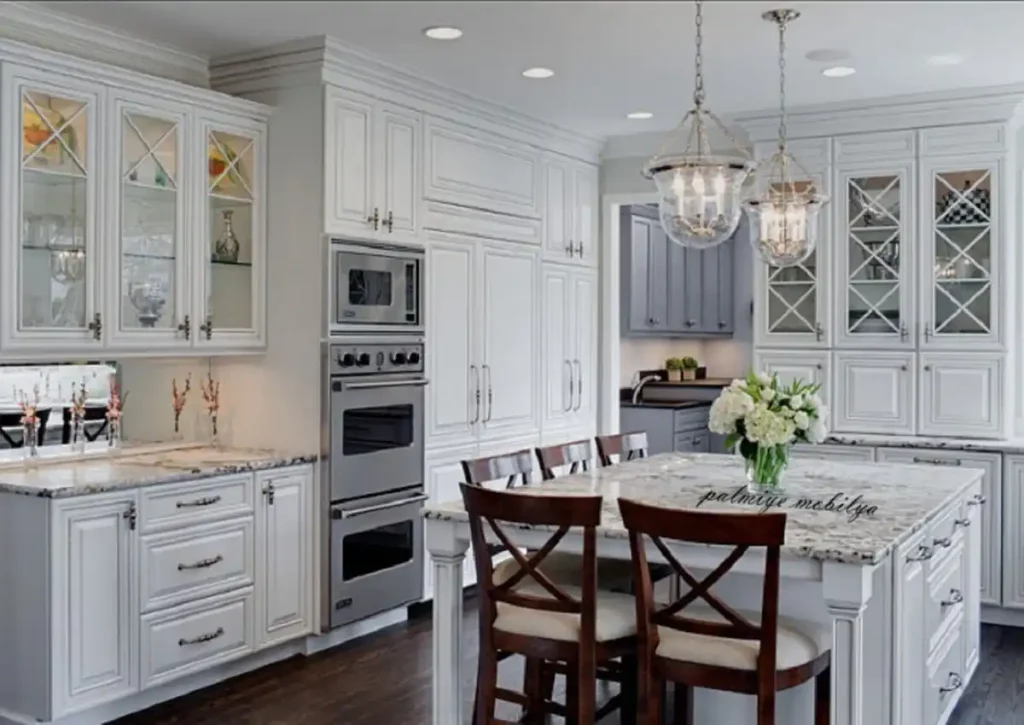
Small kitchens present a unique architectural challenge. They require a delicate balance between maximum storage capacity, ergonomic movement, and aesthetic appeal. In urban centers across Turkey—from the historic, narrow apartments of Istanbul to the modern, compact high-rises of Ankara and Izmir—the demand for efficient, small kitchen cabinets has sparked a revolution in interior design.
Turkish cabinetry manufacturers have risen to this challenge by combining centuries-old woodworking traditions with cutting-edge European manufacturing technologies. Today, sourcing small kitchen cabinets from Turkey means accessing premium materials, highly custom functional hardware, and space-optimized layouts at competitive global price points.
This technical guide provides an exhaustive analysis of Small Kitchen Cabinets Turkey. Whether you are a homeowner remodeling a compact kitchen, an architect designing a multi-unit residential project, or an international importer sourcing wholesale furniture from Turkish manufacturers, this comprehensive breakdown covers the engineering, material science, design layouts, and procurement strategies defining the Turkish cabinetry market today.
1. Ergonomics and Space Optimization for Small Kitchens
When dealing with a restricted footprint, kitchen design cannot rely on standard layout rules. Every millimeter must be engineered to prevent structural bottlenecks. The core philosophy of Small Kitchen Cabinets Turkey revolves around vertical optimization, dynamic hardware integration, and eliminating dead space.
The Compact Work Triangle
The traditional kitchen work triangle connects the refrigerator, the sink, and the cooking range. In a small kitchen, these points are often compressed. Turkish designers modify this rule into a linear or zones-based workflow to prevent user traffic jams.
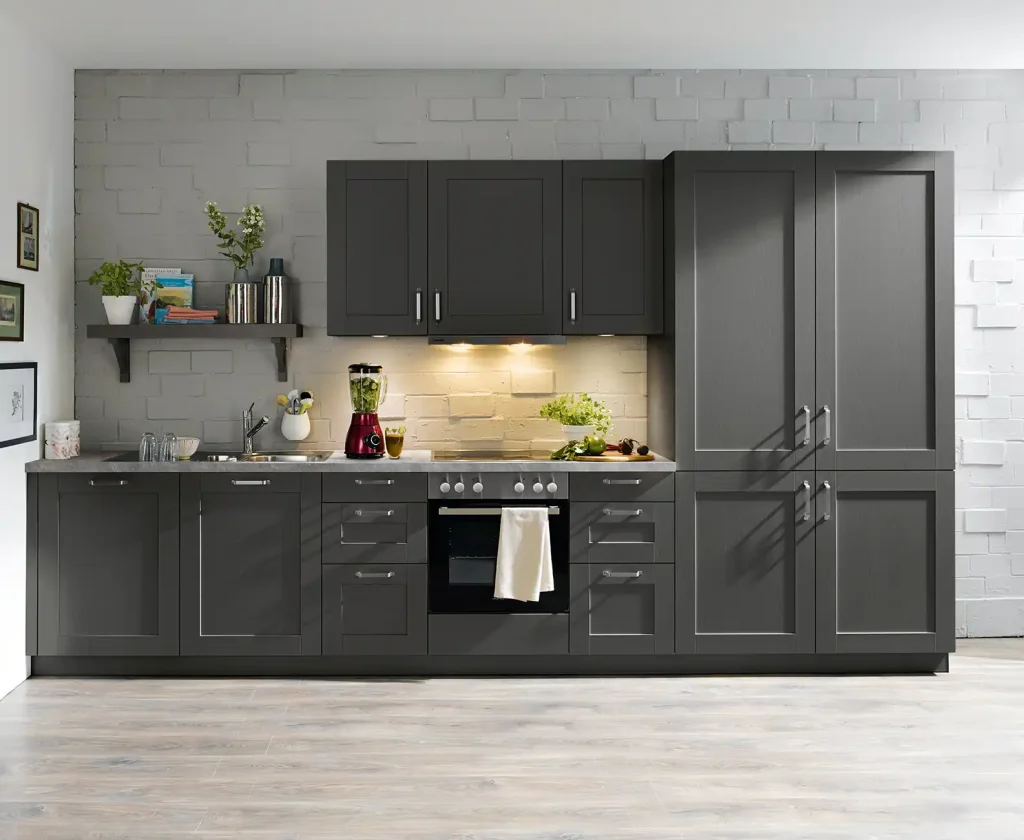
- Linear (Single-Wall) Layouts: Common in Turkish studio apartments (1+0 or 1+1 configurations). All appliances and cabinets sit on one wall. Storage must expand vertically.
- L-Shaped Layouts: Ideal for corner utilization. The challenge lies in the deep corner base cabinet, which can easily become a black hole for lost kitchenware if not fitted with modern mechanical pull-outs.
Vertical Spatial Expansion
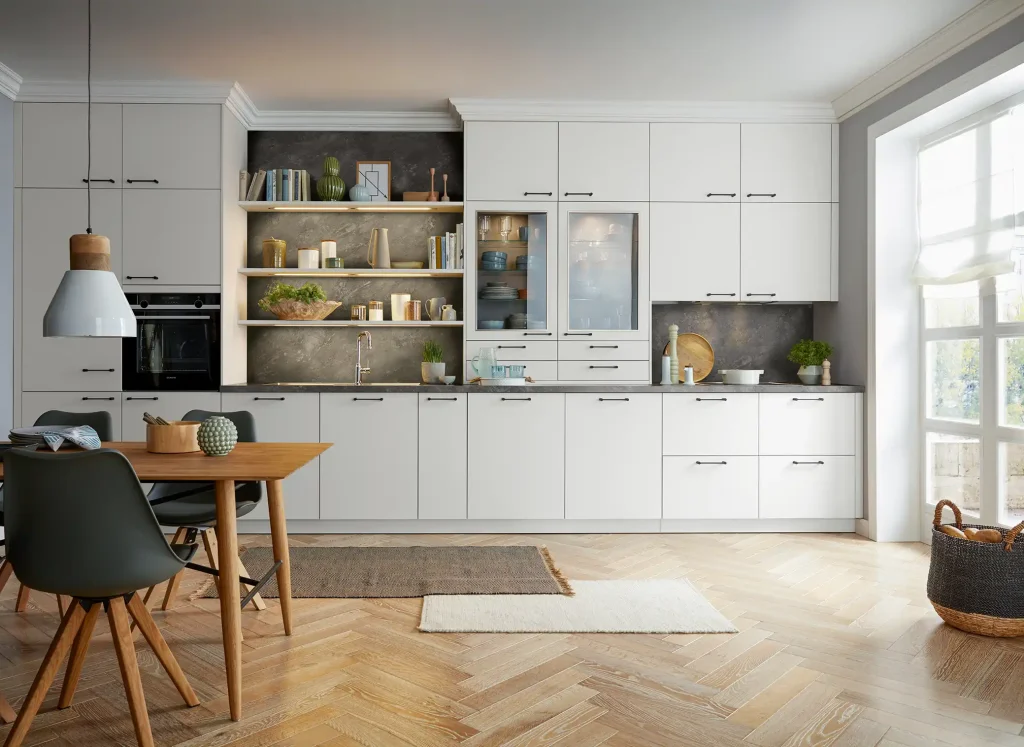
Standard kitchen wall cabinets usually stop 30 to 40 centimeters below the ceiling, creating an unusable gap that collects dust. Premium Turkish kitchen configurations eliminate this gap by extending upper cabinets completely to the ceiling line.
- Double-Tiered Upper Cabinets: Designers stack two layers of wall cabinets. The lower tier holds daily items, while the top ceiling-flush tier stores seasonal appliances or rarely used cookware.
- Reduced Depth Engineering: To avoid a claustrophobic feeling at eye level, upper cabinets can be engineered with a shallower depth (e.g., 30–32 cm) compared to the base units (60 cm). This increases headroom and improves lighting over the countertop.
Toe-Kick and Plinth Integration
The space beneath base cabinets (the plinth or toe-kick area) is typically wasted. Innovators in the Turkish furniture sector utilize this 10 to 15-centimeter vertical zone by installing toe-kick drawers. Operating via touch-latch mechanisms, these hidden drawers provide low-profile storage for flat items like baking sheets, place mats, or folding step stools.
2. Advanced Internal Hardware and Mechanics
A small kitchen cabinet is only as effective as its internal mechanics. Without smart hardware, deep shelves become inaccessible, and vertical spaces remain underutilized. When sourcing Small Kitchen Cabinets Turkey, specifying premium mechanical hardware transformations converts static boxes into high-utility storage centers.
Soft-Close Hinges and Lift Systems
In a tight kitchen space, traditional cabinet doors swinging outward can block pathways or strike the user. Turkish manufacturers heavily utilize Austrian and German-engineered hardware brands (such as Blum, Hettich, and Hafele) alongside high-quality domestic brands like Samet, a global Turkish hardware giant.
- Bi-Fold Lift Systems (Aventos style): Instead of opening outward, upper cabinet doors fold horizontally and lift upward out of the way. This allows the user to keep the cabinets open while cooking without any risk of head injury.
- 155-Degree Wide-Angle Hinges: For standard swing doors, a 155-degree hinge allows the door to open almost flat against adjacent cabinets. This provides unhindered access to internal pull-out drawers without the door blocking narrow aisles.
Corner Cabinet Solutions
The corner base cabinet in an L-shaped kitchen is notoriously inefficient. Turkish cabinetry solves this via two primary mechanical systems:
- The LeMans Pull-Out: A fluid, organic-shaped shelving system that glides entirely out of the cabinet. Each shelf operates independently, bringing items from the deepest corner directly into the light. It holds up to 25 kg per shelf.
- The Magic Corner: An articulated rectangular basket system. When you open the cabinet door, the front baskets pivot out of the way while pulling the rear baskets forward into the accessible zone.
| Hardware Type | Primary Function in Small Kitchens | Space Efficiency Rating |
|---|---|---|
| Bi-Fold Vertical Lifts | Eliminates outward door swing; opens upward. | Exceptional (Saves clearance space) |
| LeMans Blind Corner | Reclaims deep, unreached corner volume. | High (Transforms dead space) |
| Slim Pull-Out Larders | Utilizes narrow 15-20 cm gaps next to appliances. | Exceptional (Maximizes gaps) |
| Deep Tandembox Drawers | Replaces lower shelves with full-extension storage. | High (Improves ergonomic access) |
Ultra-Slim Pull-Out Pantries and Spice Racks
Oven ranges and refrigerators often leave gaps of 15 to 20 centimeters between their edges and structural walls. Standard cabinetry installations would fill this with a filler panel. Custom Turkish kitchen manufacturers construct ultra-slim, full-extension wire or solid-bottom larder units within these narrow gaps. These pull-outs are ideal for oils, spices, condiments, or cleaning supplies, turning an architectural flaw into a high-density storage feature.
3. Material Science and Core Substrates in Turkish Manufacturing
The lifespan and structural integrity of kitchen cabinets depend entirely on the chemistry and density of their internal core substrates. Turkey’s geographical positioning and massive investment in industrial timber processing have made it one of the largest producers of wood-based panels globally (featuring giants like Kastamonu Entegre and Yıldız Entegre). Understanding these materials is vital when evaluating Small Kitchen Cabinets Turkey.
Medium-Density Fiberboard (MDF) vs. Chipboard (Particle Board)
- MDF (Medium-Density Fiberboard): Made by breaking down hardwood or softwood residuals into wood fibers, combining it with wax and a resin binder, and forming panels under high temperature and pressure. MDF is dense, isotropic, and completely smooth. It holds screws exceptionally well and is highly resistant to warping. Turkish manufacturers favor MDF for premium projects, especially where intricate profiling or paint finishes are required.
- Chipboard (Melamine-Faced Chipboard – MFC): Engineered from wood chips bonded with synthetic resin and pressed. While lighter and more economical than MDF, standard chipboard is vulnerable to moisture edge-penetration. High-end Turkish suppliers utilize moisture-resistant (MR) chipboard variants, identifiable by a green dye in the core resin, for base cabinets situated around plumbing zones.
Moisture and Heat Resistance Standards
Kitchen cabinets are exposed to high humidity from cooking steam and localized heat from ovens and dishwashers. Turkish manufacturers comply strictly with European Standards (EN).
- E1 and E0 Emissions Standards: Ensures that the formaldehyde resins used in the panels do not off-gas toxic volatile organic compounds (VOCs) into the home. E1 is the baseline legal requirement in Turkey; premium manufacturers offer E0 (ultra-low emission) configurations for health-conscious markets.
- Polyurethane (PUR) Edge Banding: This is a crucial technical indicator of quality. Standard edge banding uses EVA (Ethylene Vinyl Acetate) hot-melt adhesive, which can melt or delaminate if exposed to steam from a kettle or dishwasher. High-end Turkish processing plants utilize PUR edge banding. PUR undergoes a chemical cross-linking reaction to create an unbreakable, waterproof, and heat-resistant seal between the edge band and the substrate.
4. Facing Materials, Finishes, and Aesthetic Trends
The outer skin of your cabinet dictates its resistance to scratches, UV degradation, fingerprint oils, and chemical cleaners. In a small kitchen, the finish also impacts perceived spaciousness by manipulating light reflection.
High-Gloss and Super-Matte Acrylic Panels
- High-Gloss Acrylic: For tiny kitchens, high-gloss acrylic surfaces act like mirrors. They reflect natural and ambient light deep into the room, making a cramped layout feel significantly wider. Turkish producers use multi-layer co-extruded acrylic sheets laminated onto refined MDF cores. This creates a deep, glass-like luster that does not fade or yellow under UV exposure.
- Super-Matte Anti-Fingerprint Surfaces: Homeowners who dislike glossy finishes often choose super-matte coatings. Advanced Turkish suppliers utilize electron-beam cured (EBC) or thermal-healing acrylic skins (comparable to Italian Fenix materials). These finishes possess a soft, velvet feel, completely absorb light to hide smudges, and allow micro-scratches to be repaired using localized heat (like a damp cloth and a household iron).
Membrane (Thermofoil) and PVC Wraps
Membrane technology involves vacuum-pressing a flexible polyvinyl chloride (PVC) foil over a routered MDF core.
- Seamless Geometry: The primary advantage of membrane doors in small kitchens is that the foil wraps completely around the front and side edges of the door panel in a single seamless sheet. This eliminates edge seams entirely, preventing moisture from entering the front face.
- Design Flexibility: It allows for classic shaker-style grooves or modern integrated J-pull handles without requiring complex multi-step painting.
High-Pressure Laminates (HPL) and Melamine
- Melamine-Faced Panels: An economical, highly durable option. Decorative paper impregnated with melamine resin is pressed directly onto chipboard or MDF. Modern Turkish textures offer highly realistic “synchronized” wood grains, where the physical texture of the surface perfectly matches the visual knots and veins of the printed wood pattern.
- HPL (High-Pressure Laminate): Thicker and tougher than standard melamine, HPL consists of multiple layers of kraft paper saturated with phenolic resin. It is used on cabinet doors prone to heavy impact and is the preferred material for durable, budget-friendly countertops in tight spaces.
Lacquer and Polyurethane Painted Cabinets
For luxury, fully customized small kitchens, lacquer remains the gold standard.
- Process: The MDF core undergoes multiple rounds of sanding, priming, and application of multi-component polyurethane paints in dust-free automated cleanrooms.
- Result: A perfectly uniform, monolithic door panel with zero seams. It allows for any color matching (RAL or Pantone systems), giving designers complete control over light and color balance in narrow architectural spaces.
5. Color Psychology and Visual Expansion Techniques
Color selection can fundamentally change how human psychology perceives spatial boundaries. In the context of Small Kitchen Cabinets Turkey, manufacturers and interior architects focus on color palettes that visually push walls outward and maximize light distribution.
The Power of Monochromatic Neutrals
Dark colors absorb light, making a room feel smaller and more enclosed. Small kitchens benefit enormously from monochromatic light palettes.
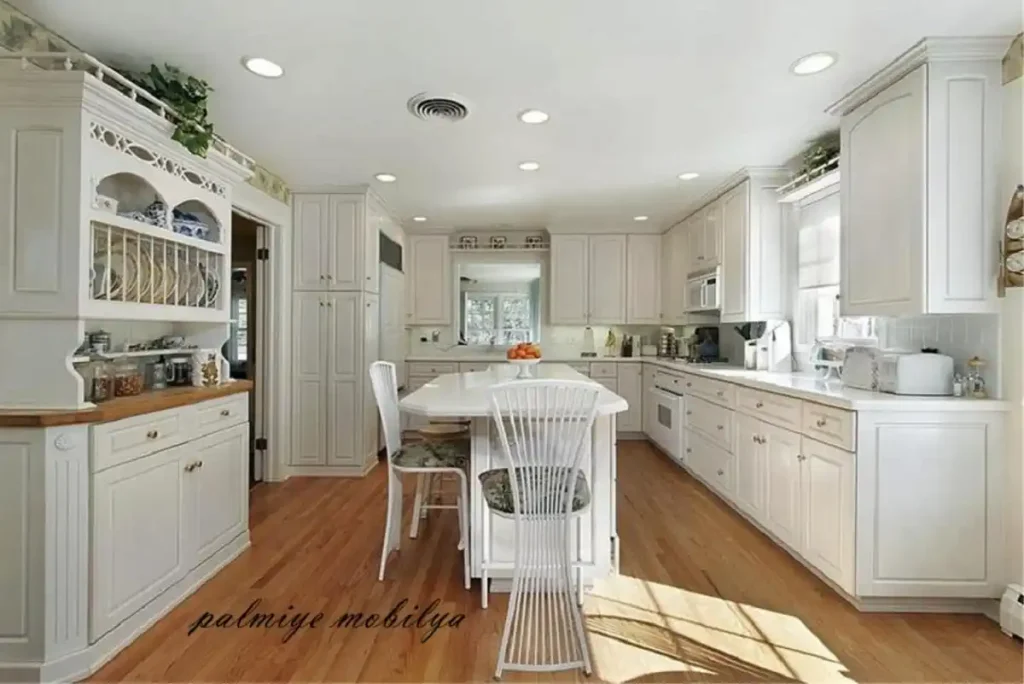
- Alabaster, Cream, and Soft White: These shades reflect up to 80-90% of available light. Using a matching white or off-white tone for both the cabinets and the surrounding walls creates a seamless visual field. This minimizes sharp contrast lines, tricking the brain into seeing a larger room.
- Greige and Cashmere: These transitional warm-gray tones add sophisticated depth without darkening the space. They provide a softer alternative to stark hospital whites while keeping the room bright.
Two-Tone (Bi-Color) Cabinet Strategy
If a homeowner wants to include color or wood textures without overwhelming a small space, Turkish designers use the two-tone rule:
- Dark Base Cabinets: Darker tones (such as navy blue, forest green, anthracite, or deep walnut) are placed strictly on the base cabinets. This grounds the kitchen visually and hides scuffs or footprints near the floor.
- Ultra-Light Upper Cabinets: The upper wall cabinets are finished in pure gloss white or soft cream. This allows the top half of the room to remain open and airy, preventing the cabinets from feeling heavy above eye level.
Handleless (Gola Profile) and Integrated J-Pull Systems
Physical handles stick out into narrow walkways, where they can catch on clothing or clutter the visual lines of a small room. Eliminating handles streamlines the space.
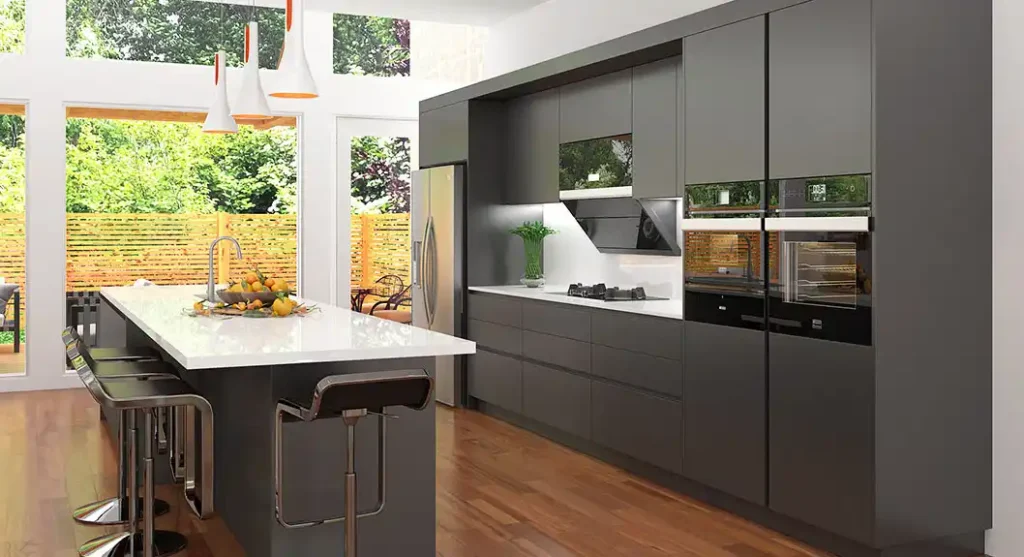
- J-Pull Profiles: The top or bottom edge of the cabinet door features a routed-out “J” shape curve that provides a finger grip. The surface remains completely flat.
- Gola Profile Systems: An aluminum channel is recessed into the cabinet carcass itself behind the door. This allows the door to remain a clean, flat rectangle; users simply slip their fingers into the recessed metallic track to pull the door open. This modern European look is a signature feature of contemporary Turkish modular kitchen exports.
6. Sourcing and Wholesale Procurement from Turkey
Turkey has established itself as an international manufacturing hub for furniture, competing directly with Italy and Germany on quality while offering major logistical and cost advantages. If you are an international buyer, real estate developer, or retailer looking to import Small Kitchen Cabinets Turkey, navigating the manufacturing ecosystem requires a clear understanding of the commercial landscapes.
Major Manufacturing Hubs in Turkey
The Turkish furniture industry is concentrated in specialized industrial zones backed by advanced supply chains:
- Bursa (İnegöl): Known as the furniture capital of Turkey. İnegöl contains hundreds of highly specialized factories ranging from boutique artisan workshops to massive automated plants. It hosts massive international furniture fairs annually.
- Kayseri: The hub for large-scale, automated mass production. Kayseri factories excel at high-volume, standardized modular flat-pack kitchen cabinetry.
- Istanbul (Modoko and Masko): These are massive furniture design cities within Istanbul. While they host luxury showrooms and custom design studios catering to bespoke architectural projects, the actual factories are typically located in the outer industrial rings of the city (like Tuzla or Hadımköy).
- Ankara (Siteler): Historically famous for high-end solid wood carving and classic cabinetry craftsmanship. Today, Siteler blends classic custom manufacturing with modern CNC technology.
Custom Bespoke Manufacturing vs. Modular Flat-Pack Systems
- Modular Flat-Pack (RTA – Ready to Assemble): Ideal for high-volume importers, e-commerce retailers, and budget construction developments. Cabinets are produced in standard dimensions (width increments of 15, 30, 45, 60, 90, and 120 cm). They are packed flat in heavy-duty cardboard boxes with integrated assembly hardware, maximizing container space during shipping.
- Bespoke Custom Cabinetry: Preferred by boutique property developers and luxury home remodelers. Turkish factories easily adapt production lines to custom architectural drawings. Millimeter-precise adjustments can be made to fit irregular structural columns, sloped ceilings, or unique appliance dimensions typical of older European and Mediterranean architectural renovations.
Logistics, Lead Times, and Freight Advantages
Turkey’s geographical position offers unparalleled supply chain resilience compared to East Asian manufacturing centers.
- Proximity to Europe and North Africa: A truck leaving Istanbul can reach Central Europe within 3 to 5 days. Maritime shipping from major ports like Ambarlı (Istanbul), Alsancak (Izmir), or Mersin offers rapid transit times to the UK, Middle East, and the Americas.
- Customs Union Agreement: Turkey’s Customs Union agreement with the European Union allows for the duty-free movement of manufactured goods, making the import process seamless for European buyers using an A.TR movement certificate.
- Production Lead Times: While Asian sourcing can require 60 to 90 days for production and transit, Turkish cabinetry plants generally maintain production cycles of 3 to 4 weeks, allowing for agile inventory management.
7. Comparative Technical Analysis: Material Attributes
To make an informed choice on cabinet specifications, project managers and buyers must evaluate performance metrics across multiple dimensions. The table below outlines the core technical behaviors of the most common cabinet facing options used in the Turkish furniture sector.
| Finish Type | Scratch Resistance | Moisture Seal Quality | Cost Index | Common Application |
|---|---|---|---|---|
| High-Gloss Acrylic | Medium (Requires acrylic polish) | High (Seamless edge possible) | Premium | Modern studio apartments, minimalist designs |
| Super-Matte / EBC | Exceptional (Micro-scratches heal) | High (Excellent PUR bonding) | High-End Luxury | High-end contemporary urban developments |
| Membrane (PVC Vacuum) | Medium-High | Superior (No front-edge seams) | Mid-Range | Shaker-style transitions, country kitchens |
| Melamine / MFC | High (Highly resistant to wear) | Medium (Dependent on edge-band) | Budget-Friendly | Standard modular rental property projects |
| Polyurethane Lacquer | Medium (Can chip upon heavy impact) | Absolute (Monolithic coverage) | Ultra-Premium | Fully custom luxury residential layouts |
8. Step-by-Step Installation and Technical Engineering Checklist
The quality of raw materials means very little if the cabinets are poorly installed. Small kitchens demand precise level balances, because even a 2-millimeter deviation across an uneven wall can cause pull-out mechanical storage systems to bind or soft-close drawers to misalign.
Phase 1: Structural Wall Assessment and Remediation
Before a single cabinet box is hung, the structural site must be evaluated.
- Plumb and Square Analysis: Use a laser level to check if the corner walls meet at a true 90-degree angle. In old buildings, corners are often obtuse or acute. If a corner is 92 degrees, an L-shaped modular kitchen will develop an expanding gap as it runs down the wall. Installers must use filler panels or shave the cabinet backs to compensate.
- Load-Bearing Verification: Small kitchens rely heavily on upper vertical storage. If wall cabinets are packed with heavy ceramic dinnerware, the wall substrate must support the weight. Standard drywall (gypsum board) requires anchoring directly into the internal metal studs, or reinforcement with internal plywood backing tracks before installation. Solid brick or concrete walls common in Turkey require heavy-duty nylon or chemical expansion anchors.
Phase 2: Base Cabinet Levelling and Moisture Isolation
Base cabinets form the foundation for the entire kitchen installation and support the heavy weight of countertops (such as granite, quartz, or porcelain slabs).
- Adjustable ABS Legs: Never place the wood cabinet carcass directly on the subfloor. Turkish cabinetry utilizes heavy-duty, adjustable ABS plastic legs. These legs isolate the wood substrate from any localized floor mopping moisture or accidental plumbing leaks. They also allow for independent levelling of each module on uneven tile or stone flooring.
- Carcass Joining: Once leveled, adjacent base cabinets must be clamped together tightly and secured using male-female binding screws. This locks the individual boxes into a single structural monolith, distributing load stresses evenly.
- Sink Base Protection: The cabinet module housing the kitchen sink is highly prone to water damage. The internal base floor of Turkish sink cabinets should be lined with a ribbed aluminum or heavy plastic drip tray. This tray catches slow plumbing leaks and prevents water from pooling directly on the wood composite surface.
Phase 3: Upper Wall Cabinet Security Suspension
- Continuous Suspension Rails: Older installation methods relied on individual eyelet brackets screwed into the back corners of each cabinet. Modern engineering dictates the use of a continuous heavy-gauge galvanized steel suspension rail bolted horizontally across the wall.
- 3D Adjustable Hanging Brackets: Inside the upper corners of each wall cabinet module, adjustable hardware hooks hook onto the steel suspension rail. These brackets allow the installer to turn internal adjustment screws to move the cabinet up, down, forward, or backward by several millimeters. This ensures a perfectly straight, flush line across all cabinet faces.
[Structural Wall] --> Heavy-Duty Galvanized Steel Rail (Bolted into Wall Studs)
                                       ^
                                       | (Hooks onto Rail)
[Cabinet Carcass] <-- Internal 3D Adjustable Hanging Bracket (Adjusts Up/Down/Depth)
Phase 4: Countertop Sealing and Backsplash Integration
Once the base units are locked in place, the countertop is installed. The intersection where the countertop meets the kitchen wall is a primary failure point for moisture entry.
- Silicone Barriers: Apply a thick bead of mildew-resistant, high-grade structural silicone along the rear edge of the countertop before pushing it against the wall or tile backsplash.
- Plinth Profile Installation: A color-matched aluminum or PVC plinth profile (countertop trim) is mounted over the joint line to provide a secondary physical barrier against water running behind the base cabinets.
9. Budgeting, Cost Drivers, and Smart Trade-Offs
When planning or importing Small Kitchen Cabinets Turkey, understanding where to invest and where to save ensures maximum value per square meter. Cost efficiency in small spaces focuses on spending money on components that experience heavy physical use, while economizing on static structural elements.
Where to Invest (Do Not Cut Corners Here)
- Drawer Slide and Hinge Mechanisms: In a small kitchen, drawers are opened far more frequently because they hold dense configurations of daily items. High-quality soft-close runners (like Samet Smart Slide or Blum Tandembox) are tested for up to 100,000 open-close cycles. Cheap, unbranded drawer slides will sag, warp, or lose their smooth glide within months under the weight of heavy pots.
- Front Edge Banding Adhesive: Always specify PUR (Polyurethane) edge banding over standard EVA hot-melt glue. The extra cost is minor compared to the financial headache of cabinet doors delaminating due to toaster heat or cooking steam.
- The Sink Module Core Substrate: Ensure that the sink cabinet box is constructed from high-density, moisture-resistant (MR) MDF, even if the rest of the hidden cabinet boxes use standard chipboard.
Where to Economize Safely
- Hidden Carcass Substrates: The interior shelves and side walls of your cabinets are completely hidden when the doors are closed. You can safely specify high-quality Melamine-Faced Chipboard (MFC) for the carcasses while reserving premium MDF or Lacquer exclusively for the visible front doors.
- Standardized Modular Widths: Custom-width cabinet boxes require manual CNC reprogramming and custom cutting, which increases production costs. Try to design your layout using standard factory widths (e.g., 30, 45, 60 cm). Use cheap, adjustable filler panels at the ends of the wall runs to absorb any odd remaining gaps.
- Simpler Door Profiles: Flat slab doors (Euro-style) are less expensive to manufacture than traditional multi-piece shaker doors or complex routing profiles. In a small kitchen, flat slab doors look cleaner and more spacious while lowering your total expenditure.
10. Maintenance, Longevity, and Warranty Considerations
Preserving the aesthetic and mechanical function of small kitchen cabinetry requires systematic maintenance, especially in compact micro-climates where heat and moisture build up quickly.
Cleaning Protocols for High-Gloss and Matte Finishes
- High-Gloss Acrylic Care: Gloss surfaces should never be cleaned with abrasive paper towels or dry microfiber cloths, which can leave microscopic swirl scratches. Use a soft, damp chamois leather or a premium clean microfiber cloth with a mild mixture of water and neutral soap. Avoid window cleaners or ammonia-based chemical sprays, as they can break down the outer acrylic layer over time.
- Super-Matte Anti-Fingerprint Surfaces: These surfaces can absorb oils from cooking sprays or hand creams over time, creating faint glossy spots. Clean them with a melamine foam sponge (often called a “magic eraser”) dipped in warm water. For stubborn grease, use an isopropyl alcohol solution.
Managing Internal Micro-Climates
Small kitchens trap humidity rapidly.
- Range Hood Efficiency: Homeowners must run the extraction hood whenever cooking to prevent steam from condensing on the underside of upper wood cabinets. Ensure the extraction fan’s volumetric flow rate (cubic meters per hour) matches the small room’s size to exchange air effectively.
- Dishwasher Steam Management: Modern dishwashers vent hot steam when opened at the end of a cleaning cycle. To protect the surrounding cabinet edges from this intense moisture spike, install a metallic steam protection strip on the underside of the countertop directly above the dishwasher door. Keep the dishwasher door fully closed until the internal temperature cools down completely.
Manufacturer Warranties and Certifications
When importing or purchasing Small Kitchen Cabinets Turkey, verify the manufacturer’s compliance certificates to ensure international quality standards:
- ISO 9001: Demonstrates an audited, consistent quality management system in the factory.
- TSE Certificate (Turkish Standards Institution): Ensures the product meets all Turkish industrial safety, durability, and material performance metrics.
- CE Marking: Crucial for European markets, confirming health, safety, and environmental protection standards.
- Warranty Terms: Reputable Turkish kitchen manufacturers offer warranties ranging from 2 to 5 years covering structural manufacturing defects and hardware failure. Ensure your supply contract clearly states the terms for replacement parts and transit damage liability.
Conclusion: Sourcing Excellence from Turkey
The market for Small Kitchen Cabinets Turkey represents a compelling blend of industrial scale, material access, and spatial engineering expertise. By utilizing vertical storage layouts, durable internal hardware, and high-performance core substrates like dense MDF with PUR edge-banding, Turkish manufacturers create high-efficiency cabinetry tailored for compact modern living.
By applying the material science criteria, ergonomic layout rules, and technical installation standards detailed in this guide, developers and homeowners can realize kitchens that feel open, organize dense storage elegantly, and withstand decades of daily use.

Şunları da sevebilirsiniz
Lacquered Room Doors Production Turkey

Solid Wood Door Turkey
